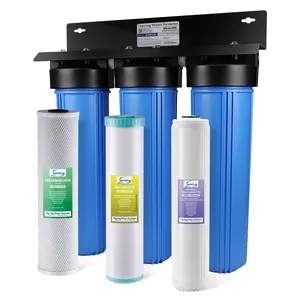
WGB32B-KDS specs
| Brand | iSpring |
|---|---|
| Service flow rate | 15 GPM |
| Media capacity | 250,000 gal |
| Filter media | Sediment + FWDS150K anti-scale + GAC/KDF compound + carbon block; targets lead, mercury, chloramine, H2S |
| Filter life | 250,000 gal |
| Certifications | Meets NSF/ANSI standards (per maker) |
| Best for water type | City or well water |
| Warranty | 1-year limited warranty; lifetime US-based tech support |
| Annual filter cost | ~$150/yr (estimate) |
| Price | $$ Mid-range (~$600–$1,300) — ~$633–$690. See Amazon for today's price. |
Specs are compiled from manufacturer listings and may change between production runs. Confirm on the retailer page before buying.
The iSpring WGB32B-KDS takes the budget WGB32B platform and aims it at harder, more difficult water: per the maker’s spec sheet, it adds an FWDS150K anti-scale stage plus KDF compound media, targeting lead, mercury, chloramine, and hydrogen sulfide, with a 250,000-gallon capacity rating at 15 GPM. The one-line verdict: the best budget pick for hard water — anti-scale plus broader contaminant targeting at a price long-life tanks can’t touch, with the usual budget-system caveats on certification.
Who the iSpring WGB32B-KDS is for (and who should skip it)
Buy it if you’re on a budget, have hard water that scales fixtures, and want a system that at least targets lead, mercury, and chloramine per the maker’s claims. It’s the KDS — not the base WGB32B — you want if scale or those contaminants are on your list.
Skip it if you need independently certified reduction: these are maker claims, full stop. The SpringWell LCR is the lead-focused pick with NSF/ANSI 53 components, and the Aquasana HealthShield carries whole-system PFAS certification. Skip it too if you want true softening — anti-scale isn’t softening.
Filtration performance
Per the maker’s spec sheet: the FWDS150K anti-scale stage plus KDF compound media, targeting lead, mercury, chloramine, and hydrogen sulfide alongside the usual chlorine/taste/odor reduction. That’s an ambitious target list for a ~$633–$690 system — and the honest framing is that these are maker claims with no independent certification marks found. Treat it as promising-but-unverified, not proven. If lead is your actual concern rather than a nice-to-have, the certified route is safer.
Flow rate and pressure
Rated at 15 GPM in the standard 20”x4.5” Big Blue format — plenty for most homes. As with all cartridge systems, watch the sediment stage: it’s the sacrificial filter, and when it loads up you’ll feel it in the shower before anywhere else.
Installation and maintenance
Same friendly Big Blue DIY format as the base WGB32B: bracket, housings, in/out plumbing. Maintenance runs about $150 per year in replacement media per the maker’s figures, and the 1-year warranty is the budget-system standard — short, but reflected in the price.
Cost of ownership
Upfront ~$633–$690 with about $150 per year in media: five-year ownership lands near ~$1,383–$1,440 before installation. That’s roughly double the base WGB32B’s five-year cost — you’re paying for the anti-scale stage and the broader target list. Whether that premium is worth it depends on whether your water actually needs it; the cost calculator can lay it against the alternatives.
Check the current price on Amazon — ~$633–$690 is approximate, so check the current price before you buy.
Ownership math and close alternatives
The iSpring WGB32B-KDS typically sells for ~$633–$690. With ~$170/year upkeep, five-year ownership lands near ~$1,483 plus installation. The media is rated for cartridges roughly every 6–12 months depending on water quality, and it’s backed by a 1-year limited warranty plus lifetime US-based tech support.
At 15 GPM it fits larger homes and 4+ bathroom households with heavy simultaneous use; if your peak demand is higher, size up rather than hope — an undersized system drops pressure when showers, laundry, and irrigation run together.
If this one isn’t quite right: the iSpring WGB32B the cheaper base 3-stage if you don’t need KDF; the APEC CB3 a Big Blue alternative popular with well-water owners. Our 2026 roundup lines up all 12 systems side by side, and our how-to-choose guide walks through the five decisions that matter most.
Install-day checklist: measure your main line (1-inch is the standard these systems are built for), leave room for a bypass valve so maintenance doesn’t shut off the house, and confirm drain access for any backwashing stage. A plumber can usually complete the whole job in half a day once these are sorted.