Salt-Free Softener vs Water Filter: What Each One Actually Does
Our top picks
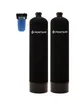 Best filter + salt-free conditioner comboPelican PSE2000 Filter + Salt-Free Conditioner15 GPM · 1,324,800 gal · Third-party scale testing8.3Price tier: Flagship, over ~$2,200Check price on Amazon
 Filter that pairs with a conditionerKind Water E-1000 Whole House Water Filter15 GPM · 100,000 gal · NSF 61/372 components8.5Price tier: Mid-range, ~$600–$1,300Check price
“Do I need a filter or a softener?” is one of the most common — and most confused — questions in home water treatment. The confusion is understandable: they’re sold side by side, sometimes in the same cabinet, but they do fundamentally different jobs.
Two problems, two technologies
Water filters remove contaminants. Activated carbon, catalytic carbon, KDF, and carbon block media target chlorine, chloramines, lead, mercury, VOCs, PFAS, sediment, and hydrogen sulfide. Every system in our 12-system roundup is a filter — they make water cleaner and better-tasting.
Softeners and conditioners address hardness. Hard water contains dissolved calcium and magnesium. It won’t make you sick, but it forms scale inside pipes and water heaters, leaves spots on dishes, makes soap lather poorly, and shortens appliance life. No filter removes these minerals — that’s a separate job.
Many homes have both problems: chlorinated city water that’s also hard, or well water with iron plus hardness. Those homes need both technologies, installed in series (filter first, then softener/conditioner, typically).
What “salt-free softener” really means
The term is marketing shorthand, and it’s misleading. Salt-free systems don’t soften water at all — they condition it. The dominant technology is TAC (template-assisted crystallization), sold under brand names like NaturSoft:
- Hard water flows through TAC media.
- Dissolved calcium converts into microscopic, stable crystals.
- The crystals flow through plumbing without sticking to surfaces as scale.
The result: dramatically less scale buildup, but a hardness test afterward still reads “hard.” The minerals are still there; they just don’t form scale. The Pelican PSE2000’s NaturSoft media was tested at 99.6% scale prevention — strong evidence for what it claims, as long as you understand the claim.
Salt-free conditioners need almost no maintenance (no salt bags, no regeneration cycles, no brine discharge) and add no sodium to the water. Their limitation: in very hard water, or where you want that slippery “soft water” feel, they don’t deliver what ion exchange does.
Salt-based ion exchange: the real softener
Traditional softeners use ion exchange resin: calcium and magnesium ions swap places with sodium ions. The hardness minerals are genuinely removed — water tests soft afterward, soap lathers richly, and scale stops forming.
The trade-offs: regular salt refills, water used in regeneration cycles, brine discharge (restricted in some municipalities), and added sodium in the water (a consideration for sodium-restricted diets and some plants). For very hard well water, though, ion exchange remains the proven answer.
Combo systems: both jobs in one cabinet
If you want filtration plus scale control without managing two systems:
Pelican PSE2000 — carbon filtration plus NaturSoft salt-free conditioning in one unit. Specs: 15 GPM, ~1.3M gallon capacity, ~$2,599–$3,099, ~$60/year upkeep, limited lifetime tank warranty. The pick for hard city water where you want chlorine removal and scale prevention together — with the honest caveat that it conditions hardness rather than removing it. Check the current price on Amazon
Kind Water E-1000 — a strong carbon-block filter (15 GPM, ~$770–$976) that pairs naturally with a standalone conditioner if your hardness warrants it. A modular approach: buy the filter now, add conditioning later if scale proves to be a problem. Check the current price on Amazon
Installation order matters
When you run both technologies, sequence them correctly: sediment pre-filter first, then the main contaminant filter, then the softener or conditioner last. The filter protects the softener’s resin or TAC media from sediment and chlorine (chlorine degrades ion-exchange resin over time), and the conditioner sees the cleanest water. Reversing the order shortens the life of the more expensive downstream stages. Combo cabinets like the Pelican PSE2000 handle this sequencing internally.
Cost comparison: the honest math
A filter-plus-softener setup is a bigger ticket than either alone, so run the 5-year numbers before committing:
- Filter only (city water, moderate hardness): SpringWell CF1 at ~$1,150 + ~$35/yr ≈ $1,325 over 5 years. If scale is mild, this may be all you need.
- Combo unit: Pelican PSE2000 at ~$2,599–$3,099 + ~$60/yr ≈ $2,900–$3,400 over 5 years. One cabinet, one install, filtration plus scale prevention.
- Filter + separate salt softener: filter cost plus ~$500–$1,500 for the softener, plus salt and water for regeneration. Highest capability for very hard water; highest maintenance.
The combo unit usually wins on simplicity; separates win when your hardness is extreme enough to justify real ion exchange. Either way, the cost calculator beats guessing.
The decision in one paragraph
Test your water. If the report shows contaminants (chlorine, lead, PFAS) but low hardness, buy a filter from our roundup and stop there. If it shows hardness above ~7 gpg with scale symptoms, add softening or conditioning — salt-based for very hard water, salt-free TAC for moderate hardness and low maintenance. If it shows both, budget for both, and run the combined 5-year cost in our cost calculator before you buy.