Whole House Water Filter 5-Year Cost 2026: Tank vs Cartridge Math
Our top picks
 Winner: lowest upkeep at ~$35/yearSpringWell CF1 Whole House Water Filter9 GPM · 1,000,000 gal · NSF 42/53 components9.2Price tier: Mid-range, ~$600–$1,300Check price on Amazon
 Cheapest entry, yearly cartridgesiSpring WGB32B 3-Stage Whole House Water Filter15 GPM · 100,000 gal · Meets NSF/ANSI standards8.2Price tier: Budget, under ~$600Check price
 Highest upkeep — specialist onlySpringWell LCR Whole House Lead & Cyst Filter8 GPM · 100,000 gal · NSF/ANSI 53 components8.2Price tier: Premium, ~$1,300–$2,200Check price
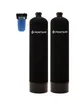 Premium combo with scale conditioningPelican PSE2000 Filter + Salt-Free Conditioner15 GPM · 1,324,800 gal · Third-party scale testing8.3Price tier: Flagship, over ~$2,200Check price
The winner on 5-year math is the SpringWell CF1: roughly $1,150 upfront plus ~$35/year in pre-filters totals about $1,325 over 5 years — lower upkeep than any cartridge system and far below lead or PFAS specialists. The cheapest sticker price, the iSpring WGB32B at ~$470, totals roughly $1,100 over 5 years once its ~$126/year cartridges are counted — still cheap, but the gap to the tank system is far smaller than the upfront prices suggest.
This is a research-based cost guide from published 2026 street pricing and maker upkeep figures, not lab testing. Every dollar figure below is approximate — prices and cartridge bundles move with promotions — so treat this as the method plus worked examples, then run your own numbers and check current prices before buying.
The formula: upfront + (yearly upkeep × years) + install
True cost has three parts. Upfront is the system plus any required pre-filter housings. Yearly upkeep is replacement cartridges or media at your household’s water use — makers rate life in gallons, so a family of four at ~300 gallons/day burns ~110,000 gallons/year and exhausts a 100,000-gallon cartridge set roughly annually. Install is usually professional plumbing at ~$200–$500, similar across systems, so it rarely changes the ranking — but budget it.
The key structural difference: tank systems (CF1, PSE2000) hold ~1M+ gallons of media that lasts roughly 6–10 years, with only a cheap sediment pre-filter to swap yearly. Cartridge systems (Big Blue 3-stage, LCR) exhaust their entire media bed every ~100,000 gallons, so you rebuy the filtration itself every year or so. That is why a $470 system can cost more to own than an $1,150 one.
For background on which architecture fits your water, see how to choose a whole house filter and our 12-system roundup.
5-year math for four representative systems
| Model | Architecture | Upfront (approx.) | Yearly upkeep | 5-year total (approx.) |
|---|---|---|---|---|
| SpringWell CF1 | Tank, carbon + KDF | ~$1,150 | ~$35 | ~$1,325 |
| iSpring WGB32B | Cartridge Big Blue | ~$470 | ~$126 | ~$1,100 |
| SpringWell LCR | Cartridge, lead block | ~$1,544 | ~$400 | ~$3,544 |
| Pelican PSE2000 | Tank + conditioner combo | ~$2,600–$3,100 | ~$60 | ~$2,900–$3,400 |
The CF1’s lifetime tank warranty is a quiet cost factor too: no replacement-tank risk in years 6–10, where cartridge systems just keep billing yearly. The Pelican PSE2000 looks expensive until you price the alternative — a standalone filter plus a softener or conditioner, two installs, two maintenance schedules — at which point one ~$60/year upkeep line for both jobs is competitive. Read the salt-free softener vs filter explainer before assuming a combo fits; conditioners prevent scale but do not remove hardness minerals the way salt softening does.
The SpringWell LCR at ~$3,544 over 5 years is the cautionary tale for buying blind: superb at its rated 99.95% lead reduction per the maker, but ~$400/year in cartridges makes it the most expensive system here to own. It earns that only in homes with lead service lines or confirmed lead — for everyone else it is the wrong system at triple the running cost.
Why cartridge costs compound
Three effects punish cartridge systems over time. First, gallon ratings assume average use — high-use households, garden irrigation tied into the main line, or sediment-heavy well water exhaust cartridges faster than the headline interval. Second, cartridge prices rise while tank media sits untouched for years; a $126 set today reprices every single year. Third, deferred changes cost pressure and taste — stretched cartridges clog, cut flow, and channel, so the “savings” from skipping a change show up as pressure loss.
Tank owners face the mirror risk: near-zero maintenance invites forgetting the pre-filter entirely. A $35 pre-filter left unchanged for two years can starve a $1,150 system of flow. Calendar reminders are free; use them.
Households on wells should also price pre-treatment honestly. Iron and manganese foul carbon fast — our well water guide explains when a dedicated iron stage upstream protects (and pays for) the main filter rather than letting cartridges die young.
When paying more to run is correct
Cost-per-year is not cost-per-problem-solved. Three cases where higher upkeep is rational:
Lead confirmed: the LCR’s ~$400/year is cheap compared to the alternative — point-of-use filters at every tap plus bottled water, or doing nothing about lead. Test first; if lead is absent, drop back to the CF1 and save ~$365/year.
PFAS confirmed: certified PFAS media (see our PFAS guide) runs ~$120–$260/year depending on system. Uncertified carbon may reduce some PFAS compounds per maker claims, but certification is what you are paying for — and for PFAS, it is worth paying for.
Hardness plus filtration: the PSE2000’s premium entry buys out a second appliance. If your test shows hard water plus chlorine, compare its $2,900–$3,400 five-year total against a separate filter ($1,100–$1,325) plus a softener install and salt — the combo frequently wins on total installed cost and floor space.
For fluoridated cities, the same logic applies to the bone-char fluoride-filter route: niche media costs more per year than plain carbon, correctly, because plain carbon cannot do the job.
Who should buy which
Buy the SpringWell CF1 if: you want the lowest long-term cost for city water with minimal maintenance — ~$35/year, million-gallon media, lifetime tank warranty. The default answer for most homes.
Buy the iSpring WGB32B if: upfront budget is the binding constraint and your water needs are simple (chlorine, sediment, taste). Accept the ~$126/year subscription with open eyes — it is still the cheapest 5-year total here, just not by the margin the sticker suggests.
Buy the Pelican PSE2000 if: you need filtration plus scale conditioning in one footprint and one maintenance schedule. Verify hardness first and understand conditioner vs softener before paying the premium.
Buy the SpringWell LCR if: and only if a water test confirms lead or cyst risk. Then the ~$400/year is the price of the right tool — and worth every dollar.
The verdict
Lowest 5-year cost for most homes: SpringWell CF1 at roughly $1,325 all-in before install. Check the current price on Amazon
Cheapest way in the door: iSpring WGB32B at roughly $1,100 over 5 years including cartridges. Check the current price on Amazon
Filter plus scale in one: Pelican PSE2000 for hard-water homes that want a single system. Check the current price on Amazon
Specialist running costs only make sense against a confirmed test result — so start with a water test via our water test guide, confirm peak demand with the flow sizer, and finalize the math in the cost calculator.