Aquasana Rhino vs Pelican PSE2000 (2026): Which Whole-House Filter (and Salt-Free Combo) Is Better?
Our top picks
 System certified to NSF/ANSI 42 for 97% chlorine reduction; 7 GPM; about $120 a year in filtersAquasana Rhino EQ-1000 Whole House Water Filter7 GPM · 1,000,000 gal · NSF/ANSI 42 certified8.6Price tier: Mid-rangeCheck price on Amazon
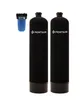 Carbon filter plus salt-free conditioner in one setup; 12 GPM; about $60 a year; conditions scale, does not softenPelican PSE2000 Filter + Salt-Free Conditioner12 GPM · 1,324,800 gal · Third-party scale testing8.3Price tier: FlagshipCheck price
The Aquasana Rhino EQ-1000 and the Pelican PSE2000 turn up in the same searches because both are premium, tank-style whole-house systems that cost more than a cartridge setup. They are not really rivals, though. The Rhino is a certified chlorine filter. The PSE2000 is a carbon filter bundled with a salt-free scale conditioner. This guide compares them on the specs in our database, says what the conditioner can and cannot do, and tells you which kind of home each one suits. Prices are ranges from our October 2026 data. Check today’s price and terms before you buy.
What is the short answer?
Buy the Rhino EQ-1000 if your main goal is independently certified chlorine reduction on city water and scale is not a big problem at your house. Buy the PSE2000 if you want filtration and scale control from one system, with no salt, no electricity and no drain line, and you accept the premium price. If you only need a filter, the PSE2000 is paying for a conditioner you will not use, and our SpringWell CF1 vs Aquasana Rhino comparison is the better next read.
How do they compare at a glance?
| Aquasana Rhino EQ-1000 | Pelican PSE2000 | |
|---|---|---|
| What it is | Carbon + KDF + catalytic carbon dual-tank filter | GAC + KDF-55 filter tank plus NaturSoft salt-free conditioner |
| Pre and post filtration | Sediment pre-filter and 0.35-micron post-filter | 5-micron sediment pre-filter |
| Service flow | 7 GPM (14.6 GPM peak) | 12 GPM (16 GPM peak) |
| Media capacity | 1,000,000 gal | About 1,324,800 gal |
| Certification listed | System NSF/ANSI 42, 97% chlorine reduction; tank WQA certified to NSF/ANSI 61 | Scale prevention third-party tested, 99.6% effective per the maker |
| Water type (our data) | City | City and well |
| Street price | $999 to $1,998 | $2,599 to $3,099 |
| Yearly upkeep | About $120 | About $60 |
| Filter life | About 1,000,000 gal (about 10 years); pre and post filters every 2 to 6 months | About 1.3M gal or 5 years of media; sediment every 6 to 9 months |
| Warranty | 10-year limited; 90-day guarantee | Limited lifetime on tanks; 5-year performance guarantee |
| Our score | 8.6 | 8.3 |
Our database tags the Rhino as mid tier and the PSE2000 as premium.
What does the PSE2000’s conditioner actually do?
This is the most misunderstood part of the comparison. The PSE2000 includes a NaturSoft salt-free conditioning tank. Per the maker’s spec sheet, it prevents scale, and the 99.6% figure is a third-party tested scale-prevention number. What it does not do is remove calcium and magnesium. The water still tests hard afterward. It just does not form scale as readily on pipes, heaters and fixtures.
That distinction decides whether the combo is for you:
- If scale on fixtures and in your water heater is your problem and you do not want to buy salt or run a drain, a conditioner can be a sensible fit.
- If you want soft-feeling water, fewer soap-scum problems or the lather you get from true softening, a conditioner will not deliver that. You need an ion-exchange softener.
- If your water is not hard, you do not need the conditioner at all.
Our salt-free softener vs filter explainer walks through TAC and NaturSoft conditioning and the order to install filter and conditioner. Our does a whole-house filter soften water guide covers when each approach fits. Start with a hardness test, and our water test guide shows what to look for.
Which has the better filtration evidence?
The Rhino. Its credential is a system-level one: NSF/ANSI 42 certified for 97% chlorine reduction, plus WQA certification of the tank to NSF/ANSI 61 for material safety. System certification means the assembled unit was tested, which is a stronger claim than component-level marks or maker-only claims. Our certifications explainer explains what each NSF standard covers.
For the PSE2000, the only certification-style item in our data is the third-party scale testing. We list no contaminant-reduction certification for the system. That does not mean it does nothing. Its GAC and KDF-55 tank targets chlorine, tastes, odors and the usual municipal complaints per the maker. It means we cannot point to independent proof for the contaminant side the way we can for the Rhino. And the Rhino’s certificate is for chlorine. It does not cover PFAS or lead, and the PSE2000 does not list those either. If PFAS is your concern, our PFAS guide covers the systems with certified claims.
How do flow rate and sizing compare?
The PSE2000’s 12 GPM rated service flow is well above the Rhino’s 7 GPM service rating. The Rhino has a 14.6 GPM peak figure, which is fine for short bursts, but sustained demand above 7 GPM means less contact time. Our data pairs the PSE2000’s 12 GPM with 4 to 6 bathroom homes, and the Rhino’s 7 GPM with 1 to 3 bathrooms.
Check your own numbers rather than relying on that pairing. Our flow rate guide explains how to estimate peak demand, and the flow sizer does the arithmetic. An undersized system drops pressure when showers, laundry and irrigation run at once. Pipe diameter matters too, because downsizing at the system costs you flow.
What does upkeep look like?
Here the two differ in how often you touch them.
- Rhino EQ-1000: the pre and post filters need swapping every 2 to 6 months, about $120 a year per our data. The main media is rated for about 1,000,000 gallons. Our data calls this the busiest maintenance schedule in the group.
- PSE2000: about $60 a year, with a sediment pre-filter every 6 to 9 months and media rated at about 5 years and 1.3M gallons. No salt to buy, no electricity and no drain.
The Rhino is cheaper to buy and more hands-on to own. The PSE2000 is the opposite. Our 5-year maintenance cost guide shows how to total upfront cost and upkeep, and it is the right way to compare any tank and cartridge system.
What does it cost over five years?
Using our price ranges and upkeep figures, before installation:
| Upfront | Upkeep for 5 years | Five-year total | |
|---|---|---|---|
| Rhino EQ-1000 | $999 to $1,998 | About $600 | About $1,599 to $2,598 |
| PSE2000 | $2,599 to $3,099 | About $300 | About $2,899 to $3,399 |
The arithmetic is just upfront cost plus five times the yearly figure. The Rhino’s range is wide because the price swings with promotions and bundles. Our data notes it sells with and without a UV purifier and conditioner option, so make sure you are comparing like with like. The PSE2000 costs more even at the low end, and the gap is about the price of the conditioner. If you were going to buy a separate conditioner anyway, the combo can look more reasonable. If you were not, it will not. Run your own numbers in the cost calculator.
What about installation?
Both are point-of-entry systems that tie into the main line. The Rhino is a dual-tank design with a post-filter, and the PSE2000 is a two-tank setup that needs real utility-room space. Our data lists neither as a casual DIY job. A cut into the main line is the kind of work where a mistake floods the basement, so most owners hire a licensed plumber. Some makers also tie warranty coverage to professional installation, so read the terms. Our installation cost guide covers typical costs, and a bypass valve is worth adding so you can service the system without shutting off the house.
Whichever you choose, confirm main line size, available floor space, and the location of the main shutoff before ordering.
Who should buy which?
Buy the Aquasana Rhino EQ-1000 if:
- Chlorine taste and odor is your main complaint on city water.
- You want a system certified as a whole, not just claimed.
- Your water is not hard enough to cause real scale problems.
- You have a 1 to 3 bathroom home with peak demand under 7 GPM, and you do not mind swapping filters a few times a year.
Buy the Pelican PSE2000 if:
- You want filtration and scale control from one setup, with no salt, electricity or drain.
- Hard water scale is hurting your fixtures and heater and you understand conditioning is not softening.
- You have a larger home that needs 12 GPM or more.
- You prefer low-touch upkeep and accept the premium price.
Buy neither if your test shows iron, sulfur or bacteria on a well, PFAS as the main concern or lead as the main issue. Those need different systems. Our best whole-house water filters of 2026 roundup compares the options, and our how to choose a whole-house filter guide walks through the five decisions that matter most.
Should I wait for Black Friday?
Black Friday 2026 is on November 27, and we have not verified any 2026 whole-house filter offers. Nothing here is a 2026 sale price. Our Black Friday guide records what SpringWell emailed in 2025 and how to judge an offer, and it notes that this niche mostly discounts direct from the brand rather than on Amazon.
The practical approach is the same as for any big purchase. Test your water now, decide whether you need the conditioner, and write down today’s price for the exact bundle you want. If an offer appears, compare it against that baseline and add the yearly upkeep before you decide it is a bargain. A cheaper unit with higher upkeep can cost more than a pricier one that is easy to run.
What should I do before choosing?
- Test your water. Check chlorine or chloramine, hardness, and on a well, iron and bacteria.
- Decide whether you need scale control. If hardness is low, skip the conditioner.
- Estimate peak flow with the flow sizer.
- Total the five-year cost for the exact bundle, including filters.
- Get a written plumbing quote from a licensed plumber.
Check the Aquasana Rhino EQ-1000 on Amazon · Check the Pelican PSE2000 on Amazon
Bottom line
The Rhino EQ-1000 and the PSE2000 solve different problems. The Rhino is the certified chlorine filter, with a lower price and more frequent filter changes. The PSE2000 is the filter-plus-conditioner combo, with higher flow, lower upkeep and a much higher price, and it prevents scale without softening your water. Pick on your test results: chlorine only points to the Rhino, and hard water plus a wish to avoid salt points to the PSE2000. If neither describes your water, a filter-only system will cost less. Check today’s price and terms.
Frequently asked questions
Is the Aquasana Rhino or the Pelican PSE2000 better?
Does the Pelican PSE2000 soften water?
Is the Aquasana Rhino certified?
Which one is cheaper to run?
Do either of these work on well water?
Should I wait for Black Friday to buy a whole-house filter?
Get new guides by e-mail
One short e-mail when Home Water Filter Guide publishes a new guide. No spam, no sharing your address, and you can unsubscribe in one click.